

Message from the CFOInvestor Relations
Strengthening Our Business Foundations for Long-term Value Creation
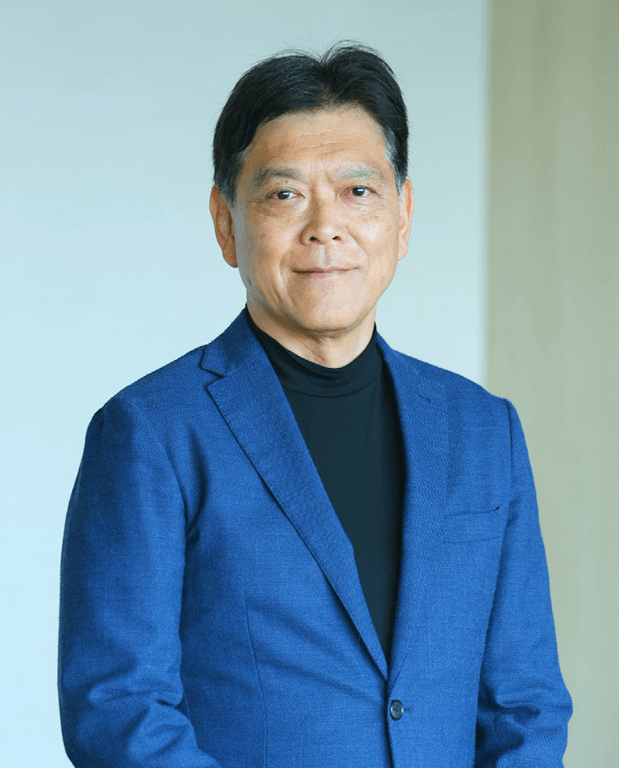
Kazuo Sakairi
Corporate Vice President,
Managing Executive Officer,
Director,
Chief Financial Officer (CFO)
Looking Back on the Past 10 Years
JERA marked its ten-year anniversary in FY2025. In the past decade, we have built an integrated value chain covering upstream fuel investment, procurement, transportation, trading, power generation and sales, and have grown into an energy company with the largest power generation capacity in Japan and one of the largest fuel transaction volumes in the world.
From my perspective as CFO, I believe there is more to reflect on than financial growth alone. To fulfill our social responsibility to support a stable supply of electricity, JERA has integrated fuel procurement, financing, and risk management, including through the COVID-19 pandemic, the Ukraine crisis, and heightened tensions in the Middle East so that they work together effectively. When LNG markets tightened, we mobilized large-scale procurement, including through the spot market, to help secure Japan's electricity supply. None of this would have been possible without everything we have built since JERA's founding: our value chain, procurement capabilities, financial foundation, relationships with financial institutions, and engagement with capital markets.
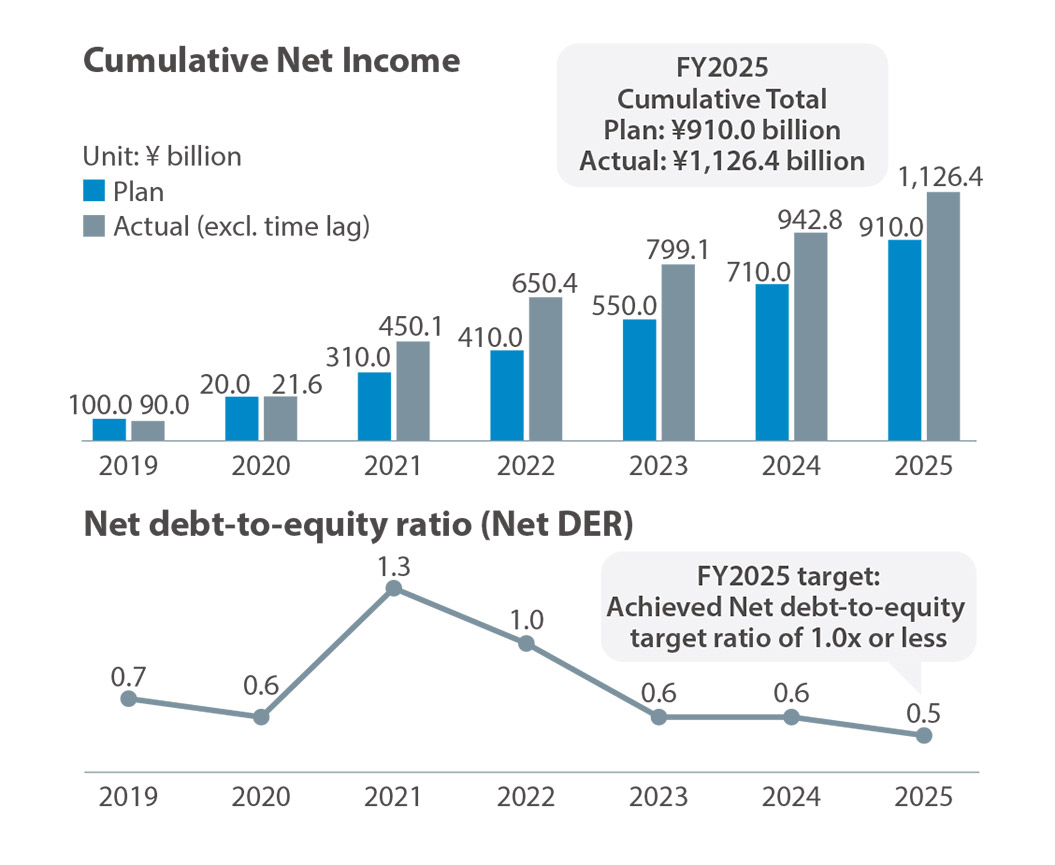
Consolidated results for FY2025 came in at ¥3.05 trillion in revenue and ¥183.6 billion in net income.* We fell slightly short of our ¥200 billion profit target, but net income was the third highest on record. Cumulative profits over the seven years since FY2019 (when both shareholders' assets were fully integrated into JERA) were ¥216.4 billion above our target. Our net debt-to-equity ratio stands at approximately 0.5x, reflecting strong financial health. Building on the foundation we have established over the past decade, we will continue to pursue stable supply, growth, capital efficiency, and resilience to future risks as a unified whole, and in doing so, deliver sustainable corporate value.
* Excluding the time lag effect of fuel cost adjustments
The Decade Ahead
Ten years after its founding, JERA is entering a new phase of growth as we embark on the decade ahead. The coming decade will test our ability to respond to increasingly unpredictable risks from geopolitical shifts, climate change, energy supply-demand volatility, and changes in policy and regulation. Against this backdrop, JERA will continue to fulfill its responsibility to support a stable energy supply while contributing to a decarbonized society and driving corporate value. Disciplined capital allocation and financial strategy will be fundamental in delivering on that ambition.
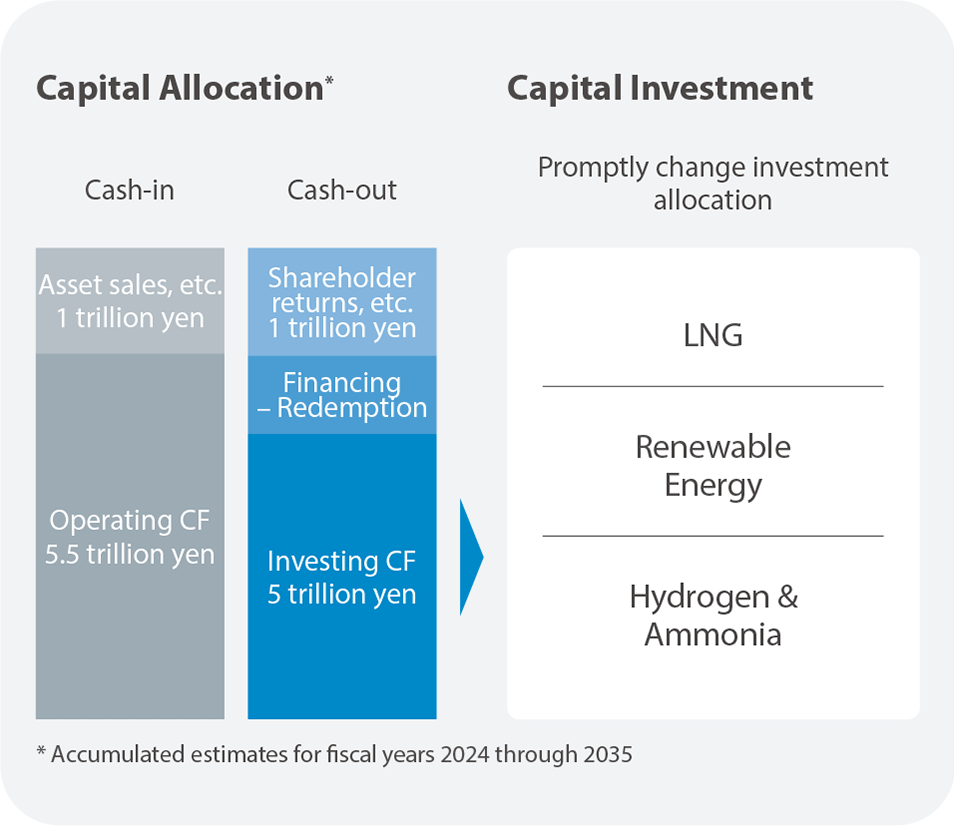
In allocating capital, we will make strategic investments to deliver our growth strategy through 2035, supported by strong cash generation, primarily from operating cash flow. From FY2024 through FY2035, we plan to invest a cumulative total of approximately ¥5 trillion across three strategic business areas: LNG, renewable energy, and hydrogen and ammonia. We will adjust capital allocation as the business environment evolves, in response to market conditions, technological advances, and policy developments. Capital allocation is not simply about investing for growth. In an uncertain environment, we need to sustain stable supply, maintain financial health, and pursue future growth opportunities - and that demands a flexible capital policy.
For the early 2030s, we have set targets of ¥350 billion in net income (excluding time lag) and ¥700 billion in EBITDA. Given how difficult it is to forecast medium- to long-term shifts in the business environment, we chose not to set a fixed ROIC target. Instead, drawing on benchmarks from overseas utilities and listed energy companies, we adopted a ROIC–WACC spread of 150 bps as our KPI, aiming to improve capital efficiency with a clear focus on the cost of capital. We are also targeting a net debt-to-equity ratio of 0.5x or below and a net debt-to-EBITDA ratio of two years or less, further improving capital efficiency and strengthening financial discipline while maintaining financial health.
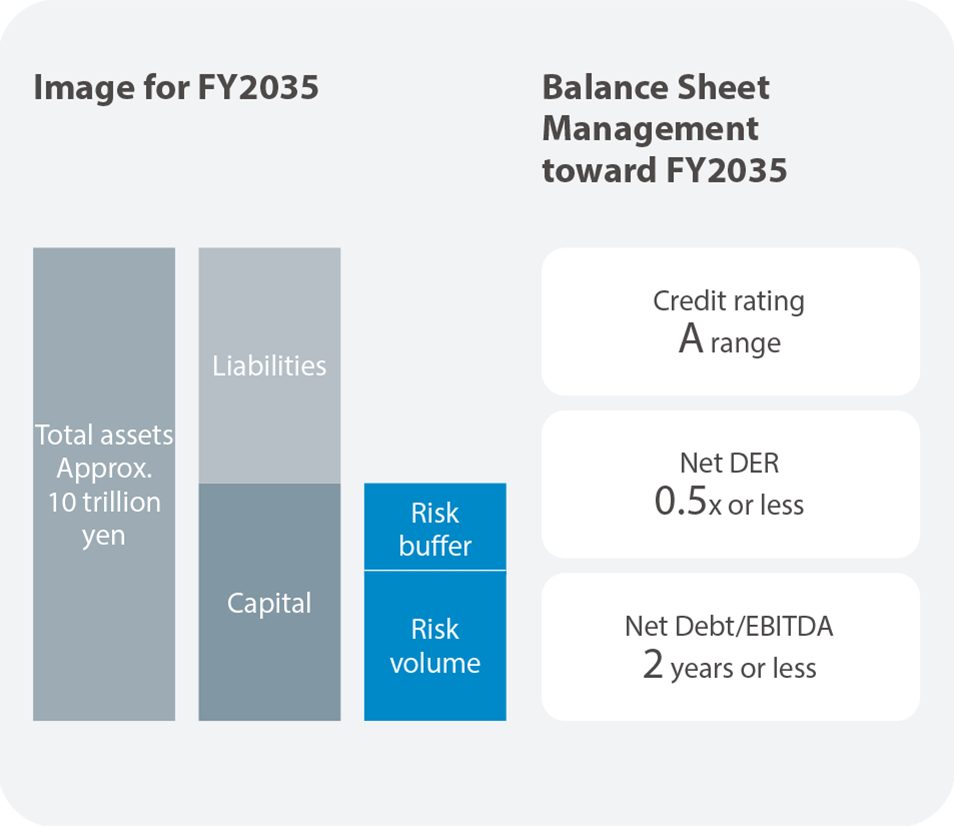
At its core, our financial strategy is about balancing growth with financial strength. We aim to maintain creditworthiness consistent with an A rating, manage risk exposure prudently, and ground every investment decision in the cost of capital, reserving the financial strength needed to respond effectively even in challenging conditions. In our approach to risk management, we classify our exposure into three categories - market risk, credit risk, and operational risk – and quantify integrated risk exposure based on market and credit risks, for which probabilities of occurrence can be estimated statistically. We call the gap between integrated risk exposure and risk capital the "risk buffer." Because operational risk cannot be quantified statistically, our policy is to maintain an adequate buffer at all times. Beyond managing financial health through integrated risk quantification, we continuously monitor cash flow and liquidity under stress scenarios to support our ability to respond effectively when conditions demand it.
Preparing for future risks and strengthening our ability to generate cash over time will require more than financial resilience alone. It will also require us to strengthen our broader business foundations spanning our business portfolio, talent, governance, and technology development. Over the next decade, JERA will work to build a management structure that balances business autonomy with the interests of JERA Group as a whole.
Enhancing Corporate Value
Today, the importance of energy security is once again coming into sharp focus. Electricity demand is rising with the expansion of AI and data centers, geopolitical risks are intensifying, and the need for emergency preparedness is growing. That said, this does not mean decarbonization or nature-positive initiatives have become less important. On the contrary, we believe the companies that can reconcile stable supply, decarbonization, and stewardship of natural capital will be better positioned to earn the support of society and capital markets over the medium to long term.
JERA is advancing a realistic and responsible energy transition, positioning its response to climate change and stewardship of natural capital as key drivers of corporate value. We see our work on decarbonization, the circular economy, and nature-positive goals not as responses to social expectations alone, but as investments intended to reduce future business risk and create new growth opportunities.
A strong foundation also depends on our people. As the challenges facing the energy industry become increasingly complex and global, we believe diverse perspectives are a source of competitive strength. To bring those perspectives into decision-making, we are expanding the role of outside directors, appointing non-Japanese executives, and recruiting highly specialized talent from Japan and around the world. Our goal is to create an environment where people with diverse backgrounds can thrive and contribute to JERA's long-term success. Within the Finance and Accounting Department, I hold regular CFO town halls with employees from headquarters, business divisions, overseas offices, and power stations. These sessions allow me to hear candid perspectives directly from younger employees and reflect their insights into management discussions, while fostering an open and transparent culture.
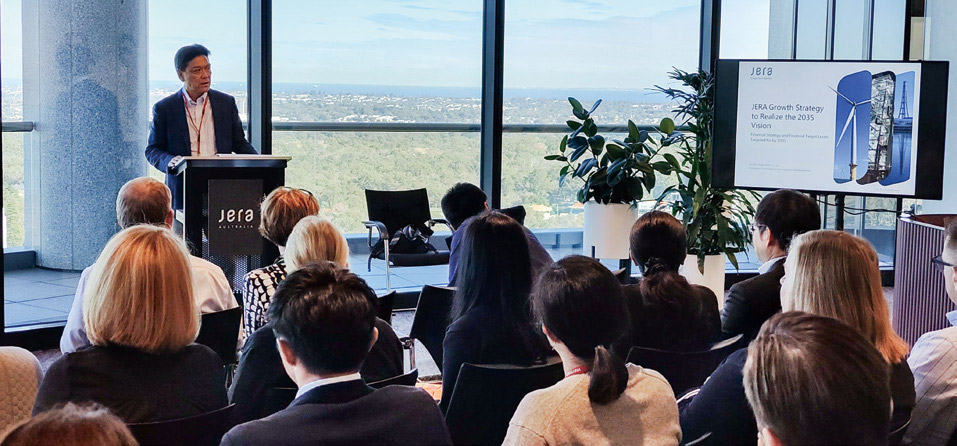
To support our growth strategy, we are introducing a job-based HR system designed to attract and retain highly specialized talent. In a rapidly changing business environment, people are our most important source of long-term value creation, and we are committed to providing opportunities for individuals to deepen their expertise and maximize the value they can contribute at JERA.
As our business grows and our international footprint expands, strengthening governance remains a priority. In addition to enhancing the effectiveness of JERA's Board of Directors, we are improving governance across the Group through initiatives such as developing skills matrices for key subsidiaries and strengthening internal audit functions.
Future competitiveness cannot be secured by staying on the current trajectory. Sustained growth will also require us to look beyond our existing businesses. Through JERA Ventures, our corporate venture capital arm, we are partnering with startups around the world to explore innovative technologies and business models. Examples include our collaboration with Newlab, an innovation hub, toward the commercialization of low-concentration CO2 capture solutions and our investment in Quaise Energy, a developer of next-generation geothermal power technology. These partnerships deepen our expertise in energy transition and next-generation technologies while opening up new business opportunities.
We engage capital markets - investors, financial institutions, and others - in dialogue on our growth strategy, financial strategy, capital allocation, and sustainability efforts, and bring the expectations and challenges raised through those dialogues back into our management decisions. We believe these conversations enhance our corporate value by deepening mutual understanding and trust.
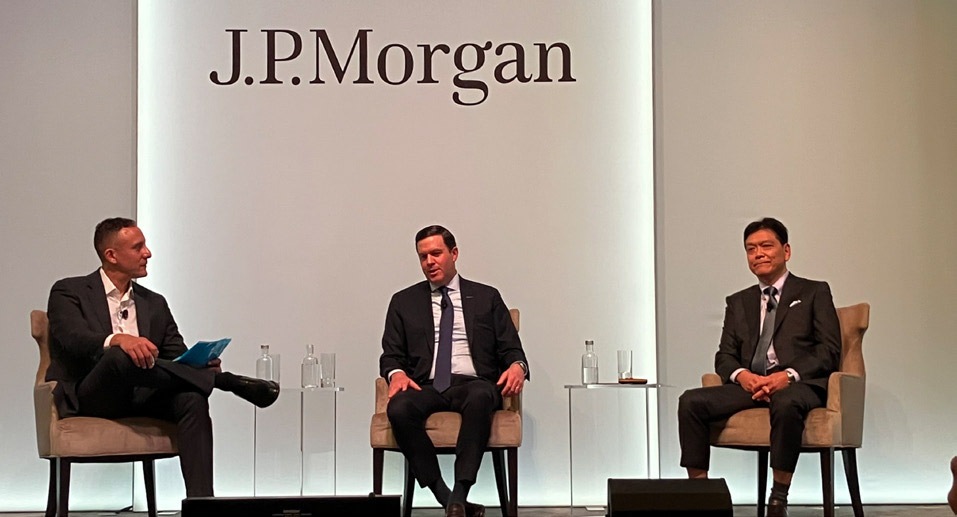
From left: Tarek Hamid, Managing Director and Head of North America Credit Research, J.P. Morgan Securities LLC; Zach Davis, CFO, Cheniere Energy; and Kazuo Sakairi, CFO, JERA
Over the decade ahead, JERA will continue to strengthen the business foundation that supports stable supply, growth, and decarbonization. By doing so, we aim to deliver sustainable value to our shareholders, society, and a wide range of stakeholders, while continuing to enhance our corporate value over the long term.